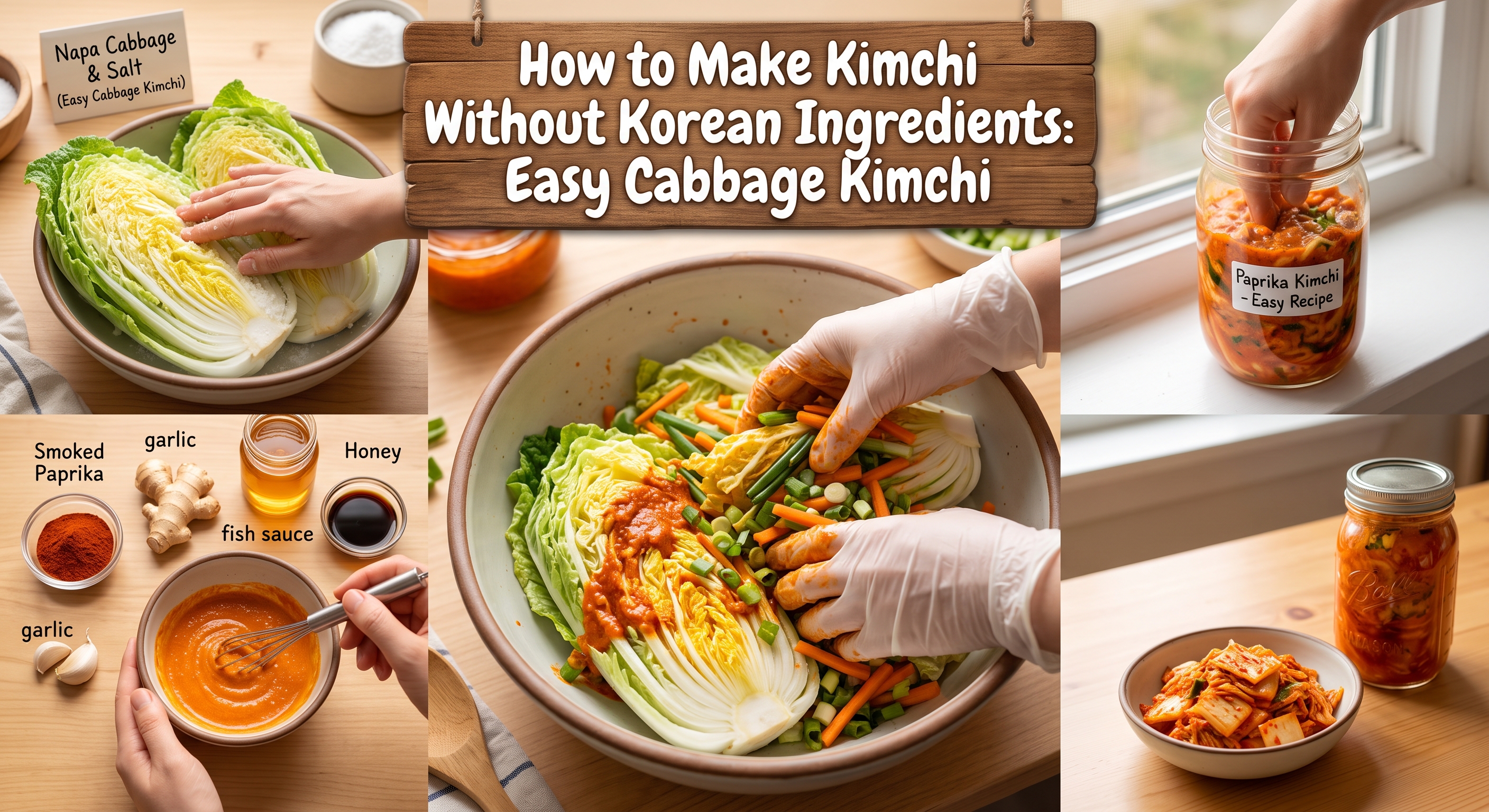
How to Make Kimchi Without Korean Ingredients: Easy Cabbage Kimchi
How to Make Kimchi Without Korean Ingredients: An Easy Cabbage Kimchi Recipe You Can Make Anywhere in the World
My Kimchi-Making Story: No Korean Grocery Store, No Problem
When I moved abroad, one of the things I missed most from home wasn't a place or a person — it was the smell of kimchi fermenting quietly on the kitchen counter. The problem was simple: there was no Korean grocery store anywhere near me. No gochugaru (Korean red pepper flakes), no Korean fish sauce, not even napa cabbage in most supermarkets.
At first, I assumed I'd just have to live without it. But after some trial, error, and a few not-so-great early batches, I figured out how to make a version of kimchi that was shockingly close to the real thing — using nothing but regular cabbage and ingredients you can find in almost any supermarket in the US, UK, Europe, or Africa.
This post is the exact method I use now. It's beginner-friendly, doesn't require any special equipment, and works with plain green or white cabbage — not just Korean napa cabbage. If you've been searching for "kimchi recipe without Korean ingredients" or "how to make kimchi with regular cabbage," this guide is for you.
Why Regular Cabbage Works Just Fine
Traditional kimchi is usually made with napa cabbage (also called Chinese cabbage) because of its soft, thin leaves that absorb seasoning well. But the fermentation process — the thing that actually makes kimchi taste like kimchi — works with almost any cabbage. Green cabbage, white cabbage, and even Savoy cabbage all ferment beautifully when salted and combined with the right seasoning paste.
The texture will be slightly crunchier than traditional napa kimchi, but many people (myself included) end up loving that extra crunch.
Korean Ingredients vs. Easy Substitutes
Here's the part everyone actually wants: what do you use instead of gochugaru, fish sauce, and other hard-to-find Korean ingredients? Below is the substitution list I rely on.
| Korean Ingredient | What It Does | Easy Substitute |
|---|---|---|
| Napa cabbage | Base vegetable | Green or white cabbage |
| Gochugaru (Korean chili flakes) | Color, mild heat, flavor | Crushed red pepper flakes + a little sweet paprika, or mild cayenne mixed with paprika for color |
| Korean fish sauce | Salty, savory depth (umami) | Regular soy sauce, or a splash of Worcestershire sauce, or plain salt if avoiding all fish products |
| Salted shrimp (saeujeot) | Extra umami | Skip it entirely, or use a small amount of soy sauce |
| Korean radish | Crunch and sweetness | Regular white radish (daikon) or even fresh carrot |
| Sweet rice flour | Thickens the paste | A small spoon of regular flour, cornstarch, or even a pinch of sugar and water mixed into a thin paste |
| Garlic and ginger | Aromatics | These are the same everywhere — no substitute needed |
| Scallions/green onions | Fresh bite | Found in nearly every grocery store worldwide |
Pro Tip: The truth is, real kimchi flavor comes mostly from salt, garlic, ginger, chili, and fermentation time — not from any single hard-to-find ingredient. Once you understand that, you can build kimchi flavor almost anywhere.
What You'll Need (Ingredients)
- 1 medium head of green or white cabbage (about 1 kg / 2 lbs)
- 1/4 cup salt (for salting the cabbage)
- 4–5 garlic cloves, minced
- 1 tablespoon grated fresh ginger
- 2–4 tablespoons red pepper flakes (adjust to taste and desired heat)
- 1 tablespoon soy sauce (or fish sauce if available, or Worcestershire sauce as a substitute)
- 1 teaspoon sugar
- 1 small carrot, julienned
- 3–4 green onions/scallions, chopped
- 1 small onion, grated or blended (adds natural sweetness and depth)
- Optional: 1 small apple or pear, grated, for natural sweetness
Step-by-Step: How to Make Cabbage Kimchi
Step 1: Cut and Salt the Cabbage
Cut the cabbage into bite-sized squares or strips. Place it in a large bowl, sprinkle the salt evenly over all the pieces, and mix well with your hands so every piece gets some salt. Let it sit for 1.5 to 2 hours, tossing every 30 minutes. The cabbage will soften and release water — this is exactly what you want.
Step 2: Rinse and Drain
After 1.5–2 hours, rinse the cabbage two to three times under cold water to remove excess salt. Drain it well in a colander for at least 15–20 minutes. Squeeze gently to remove extra water.
Step 3: Make the Seasoning Paste
In a separate bowl, mix the garlic, ginger, red pepper flakes, soy sauce, sugar, and grated onion (and apple/pear if using) into a thick paste. If it feels too dry, add a tablespoon of water. This paste is the heart of the flavor, so taste it and adjust — more chili flakes for heat, more sugar for sweetness, more soy sauce for saltiness.
Step 4: Combine Everything
Add the drained cabbage, julienned carrot, and chopped green onions to the seasoning paste. Using clean hands (gloves are helpful here, since chili flakes can irritate skin), massage the paste into every piece of cabbage until it's evenly coated in red seasoning.
Step 5: Pack It Into a Jar
Pack the seasoned cabbage tightly into a clean glass jar, pressing down firmly so there are no air pockets and the cabbage is submerged in its own liquid. Leave about 1 inch (2–3 cm) of space at the top, since the kimchi will bubble and expand as it ferments.
Step 6: Ferment at Room Temperature
Leave the jar at room temperature, out of direct sunlight, for 1 to 3 days. Check it daily — you'll notice small bubbles forming, and the smell will turn slightly tangy and sour. This is fermentation happening naturally, the same process that happens in traditional Korean kimchi.
Step 7: Move to the Refrigerator
Once it reaches a level of tang you enjoy, move the jar to the refrigerator. This slows down fermentation and lets you enjoy it for weeks. Kimchi actually tastes better after a few extra days in the fridge, as the flavors continue to deepen.
Tips for Best Results
- Taste as you go: Fermentation speed depends heavily on room temperature — warmer rooms ferment faster, cooler rooms take longer.
- Keep it clean: Use a clean jar and clean hands to avoid introducing unwanted bacteria.
- Don't skip the salting step: This draws out water and creates the right environment for good fermentation.
- Adjust spice freely: Regular chili flakes are hotter than Korean gochugaru, so start with less and add more to taste.
- Too sour? If it gets too sour, use it for kimchi stew (kimchi jjigae) or kimchi fried rice instead of eating it fresh.
Frequently Asked Questions
Q: Can I make kimchi without any spicy pepper at all?
A: Yes. You can make a mild "white kimchi" style version using just salt, garlic, ginger, and a touch of sugar, without any chili flakes at all.
Q: Do I need a special fermentation jar?
A: No. A regular glass jar with a lid works fine. Just remember to "burp" the jar (open it briefly) once a day during fermentation to release built-up gas.
Q: How long does homemade cabbage kimchi last?
A: Stored in the refrigerator, it typically lasts 3–4 weeks, and often longer, continuing to develop flavor the entire time.
Q: Is it safe to make kimchi without fish sauce?
A: Absolutely. Many vegan and vegetarian kimchi recipes skip fish sauce entirely and rely on soy sauce, salt, and vegetables for flavor.