The K-Museum & Kitsch Merchandise: How Korea Turned National Treasures Into the Coolest Souvenir in Seoul
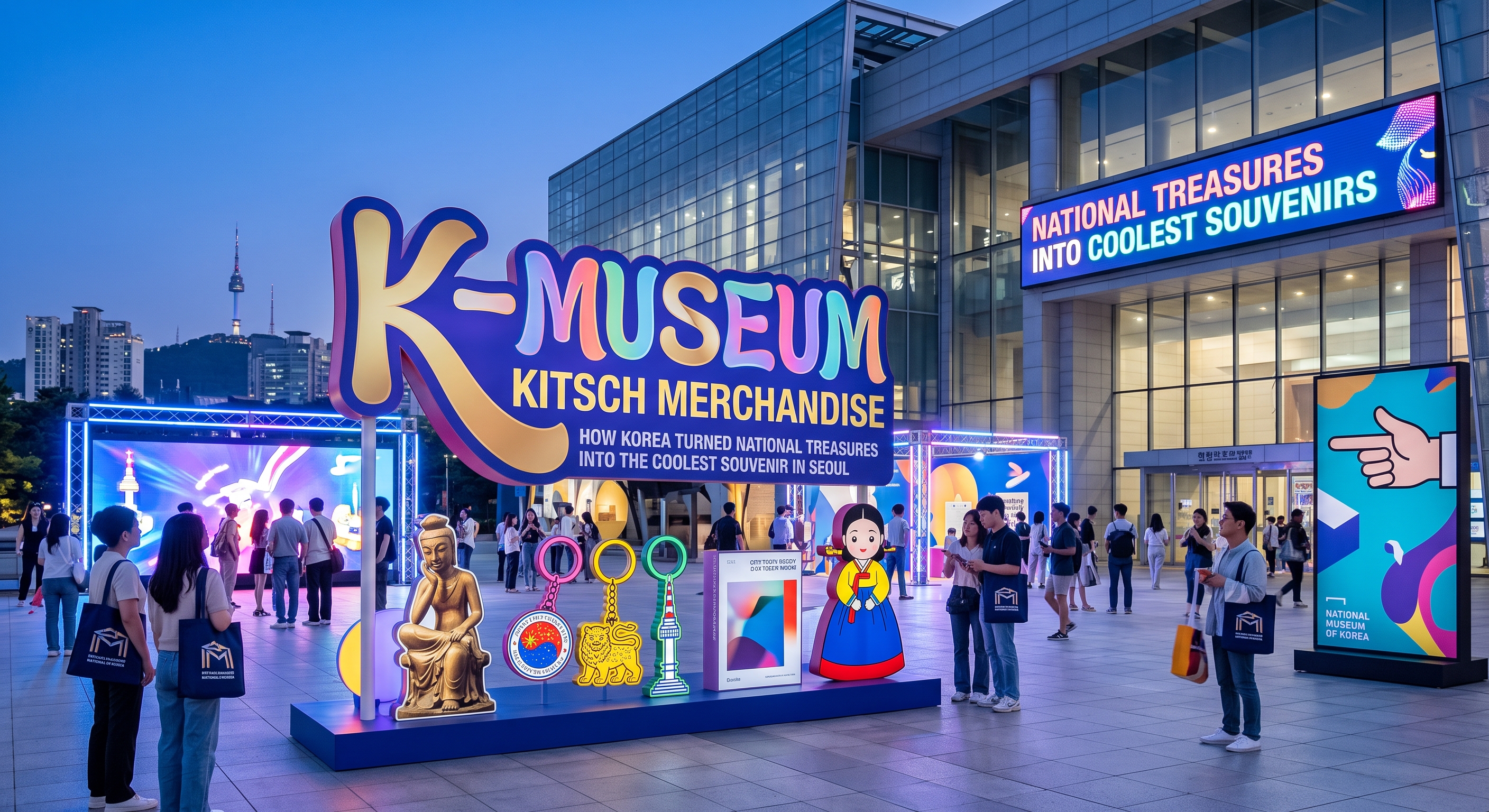
I'll admit something upfront: I never expected to write a blog post recommending a museum gift shop. But the National Museum of Korea gift shop has genuinely become one of those places where you show up planning to spend ten minutes browsing and walk out forty-five minutes later, arms full, wondering how a national treasure ended up looking this good sitting on your desk.
If you're visiting Seoul and looking for a souvenir that isn't another keychain or fridge magnet, this is where to go. Here's why it's become such a phenomenon — and why the design behind it is worth understanding, not just the products themselves.
Meet MU:DS: The Brand Behind Korea's Museum Merch Boom
Since January 2022, the National Museum of Korea's gift shop hasn't just sold generic souvenirs — it's operated under an official brand called MU:DS (short for "Museum Goods"), run by the Korea National Museum Cultural Foundation. The concept is simple but genuinely smart: take artifacts from the collections of 16 national museums across Korea and reimagine them as everyday objects — housewares, accessories, stationery, tech accessories — instead of leaving them as untouchable display pieces behind glass.
It worked. The National Museum of Korea has now surpassed 4 million cumulative visitors and ranks among the top museums worldwide by attendance. And as the crowds grew, the gift shop line started rivaling the exhibition halls themselves, especially on weekends.
The Star of the Show: The Pensive Bodhisattva Miniature
If there's one item that defines this whole trend, it's the Pensive Bodhisattva miniature — a small-scale reproduction of the Gilt-bronze Pensive Bodhisattva, National Treasure No. 83, one of Korea's most revered Buddhist sculptures. The original is a solemn, museum-lit centerpiece. The miniature version, by contrast, comes in soft pastel tones with a subtle pearlescent finish, looking more like a design object you'd find in a Copenhagen concept store than a religious artifact replica.
The tipping point for this product came in 2022, when BTS member RM — a well-known museum and traditional art enthusiast — posted a photo with the figure on social media. It sold out almost instantly and has been a steady bestseller ever since. Each unit typically comes packaged with explanatory cards in Korean, English, Japanese, and Chinese — a small design choice that matters a lot for international buyers, since it turns the object from "a pretty thing I bought" into something you can actually explain to whoever you're gifting it to.
Korean Mother-of-Pearl Inlay, Reimagined for Daily Life
The other signature material running through this whole product line is Korean mother-of-pearl inlay, known in Korean as najeon chilgi — a centuries-old lacquerware technique where thin, iridescent shell pieces are set into lacquer to create intricate, shimmering patterns. Traditionally, you'd see this technique on furniture, jewelry boxes, and ceremonial items passed down for generations.
MU:DS has taken that same material and put it on things you'd actually use every day: mother-of-pearl wireless phone chargers styled after traditional low dining tables, mother-of-pearl Taegeukgi (Korean flag) keyrings — some modeled after the historic "Denny Taegeukgi," a version of the flag gifted by King Gojong to an American advisor — and mother-of-pearl-patterned long umbrellas that sell out almost as fast as they're restocked. The shimmer of the inlay catches light differently depending on the angle, which is exactly why it photographs so well — and exactly why it's spread so widely on social media among visitors documenting their Korea trip.
The Rest of the Lineup Is Just as Charmingly Weird
Beyond the Bodhisattva and the mother-of-pearl pieces, part of what makes this trend so fun is how playful some of the other products get:
- Color-Changing Cup Set: Featuring three "drunken scholars" inspired by artist Kim Hong-do's painting The Banquet of the Governor of Pyongan. Pouring in a cold beverage below 18°C slowly turns the scholars' faces red.
- Baekje Gilt-Bronze Incense Burner Miniature: A scaled reproduction of National Treasure No. 287, alongside specialized burner sets styled after a traditional Korean kitchen stove that releases wisps of smoke through the chimney.
- Traditional Porcelain & Ceramics: Moon jar door chimes shaped after white porcelain jars, roof-tile-shaped chopstick rests, and celadon cup sets modeled closely on Goryeo-era relics.
- Dancheong Keyboards: Mechanical keyboards patterned after the vivid, multicolor paintwork traditionally found on Korean temple beams and palace eaves.
None of this reads as tacky souvenir-shop kitsch. It reads more like a design studio was handed the keys to a national art collection and told to have fun — which, effectively, is exactly what happened.
Why It Resonates So Strongly With Foreign Visitors
A few unique factors are converging here that make this more than just a local shopping trend. First, the multilingual packaging matters a lot for tourists who want a gift that communicates genuine cultural history. Second, there is an unexpected pop-culture tailwind from international fans seeking traditional Korean motifs. Third, this trend has already successfully gone international, highlighted by official pop-up collaborations hosted at the Korean Cultural Center in Los Angeles.
The economic performance data from the first half of 2026 clearly reflects this massive surge in global and domestic demand:
| MU:DS Performance Metric (H1 2026) | Statistical Figure | Year-over-Year (YoY) Growth |
|---|---|---|
| Total Revenue | Approx. 21.8 Billion KRW | Up 90% YoY |
| Sales to Foreign Customers | Approx. 1.0 Billion KRW | Nearly Doubled YoY |
| Pensive Bodhisattva Miniature Sales | Approx. 12,000 Units (Over 61,000 Cumulative) | Steady Bestseller Line |
If You're Visiting: Practical Notes
The main gift shop is inside the National Museum of Korea in Yongsan, Seoul, and keeps the same hours as the museum itself — generally 10 a.m. to 6 p.m. on weekdays, with extended hours until 8 p.m. on Wednesdays and Saturdays. Popular items sell out fast and restocks aren't always predictable, so if something catches your eye in person, it's worth buying it on the spot rather than coming back later. For anything already sold out, the museum also runs an official online shop that ships items once they're back in stock.
A Design Trend Worth Paying Attention To
What I find genuinely impressive here isn't just that a museum gift shop got popular — it's the underlying design instinct. Someone looked at a 1,400-year-old Buddhist sculpture and a centuries-old lacquerware technique and asked, "how do we make this feel alive for someone born in 2005?" instead of just shrinking it down and slapping it on a magnet.
That's a genuinely different approach to cultural merchandising than most countries take, and it's part of why Korea's soft power keeps expanding into places you wouldn't expect — including, apparently, a museum gift shop line that now outsells plenty of actual fashion brands. If you're in Seoul, it's worth the detour even if you weren't planning to visit the museum itself for long.
Plan Your Visit & Shop the Collection
If you want to experience these incredible cultural treasures in person, you can plan your visit via the National Museum of Korea Official Website.
Can't make it to Seoul just yet? You can still browse and purchase these trendy, modern reinterpretations of Korean heritage online through the National Museum Foundation Official Souvenir Shop.
Note: This article is based on publicly available museum data and user reviews as of mid-2026. Inventory and product lineups are subject to change based on seasonal collections and operational schedules.