Crunchy, spicy, tangy — and ready before your rice finishes steaming.
Why I Make This Every Summer
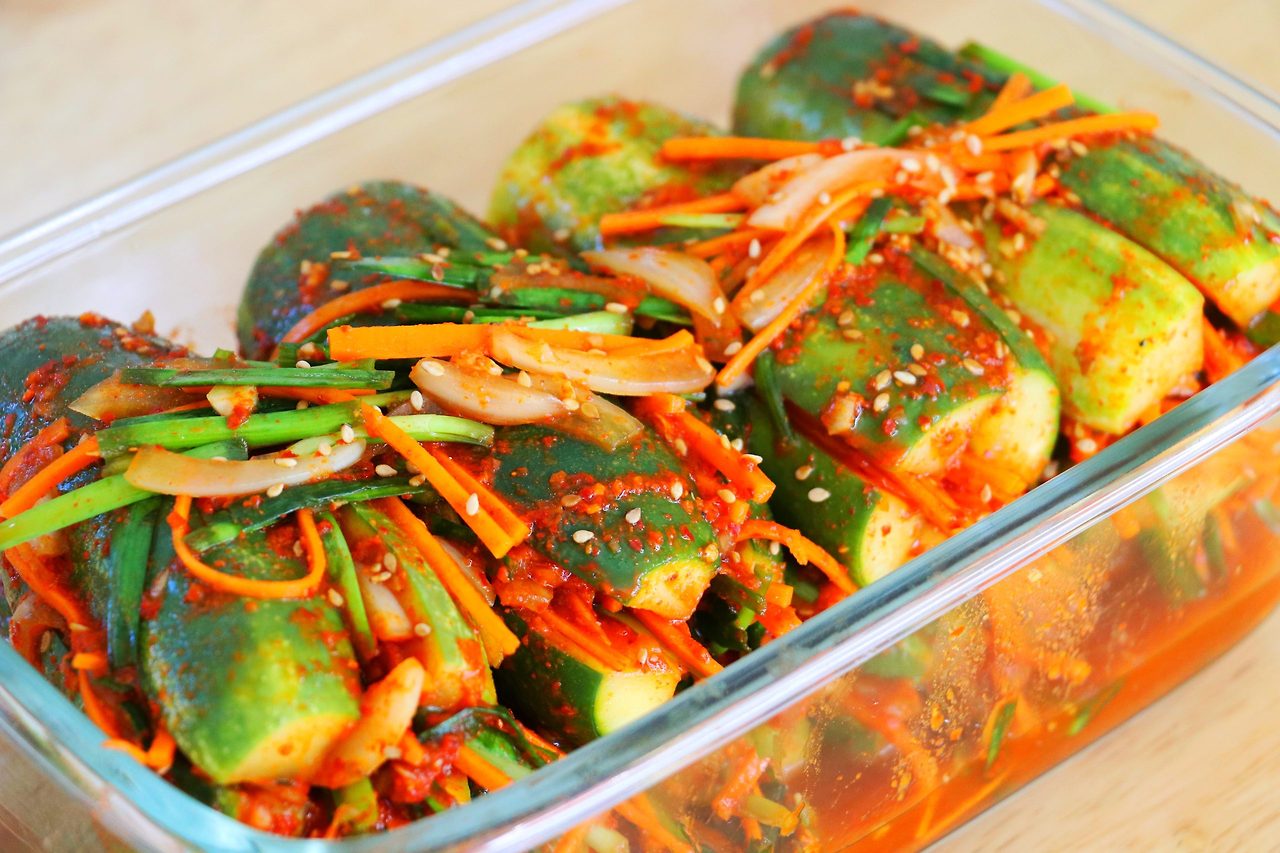
I still remember the first time my grandmother handed me a cucumber straight off her balcony garden, told me to "go wash it," and thirty minutes later we were eating oi kimchi with warm rice on the floor of her tiny Busan apartment. No fancy equipment. No three-day fermentation. Just cucumbers, a few pantry staples, and hands that knew exactly how much gochugaru was "enough."
That's the recipe I'm sharing today. It's not a restaurant version — it's the one my family has made for three generations, adjusted over the years so that anyone, anywhere, whether you're in Seoul, Seattle, or Sheffield, can walk into a regular grocery store and make it that same afternoon.
If you've never made kimchi before, oi kimchi is the perfect entry point. Unlike napa cabbage kimchi, it doesn't need weeks of fermentation — you can eat it fresh the same day, or let it sit a day or two in the fridge for a deeper flavor. It's spicy, garlicky, a little sweet, and shatteringly crunchy.
What You'll Need (With Substitutes for the US, UK & Beyond)
One thing I learned after moving abroad: Korean grocery stores aren't always around the corner. So here's exactly what I use back home, and what I use when I can only get to a regular supermarket.
| Ingredient | What I Use in Korea | US Substitute | UK / Europe Substitute | Notes |
|---|---|---|---|---|
| Cucumbers | Korean cucumbers (dwarf, thin-skinned) | Persian or Kirby/pickling cucumbers | Mini cucumbers or ridge cucumbers | Avoid waxy English cucumbers if possible — too watery. If it's all you have, salt them a few extra minutes and pat very dry. |
| Gochugaru (Korean red pepper flakes) | Coarse gochugaru | Sold as "gochugaru" on Amazon/H-Mart online; Aleppo pepper + paprika in a pinch | Amazon UK or Asian grocers; Aleppo pepper works as backup | Regular chili powder is too fine and too hot — don't substitute 1:1. |
| Fish sauce | Korean anchovy sauce (myeolchi-aekjeot) | Thai or Vietnamese fish sauce (Red Boat, Three Crabs) | Same brands, widely available | For a vegan version, use soy sauce or a splash of soy sauce + rice vinegar. |
| Garlic | Fresh, minced | Fresh garlic, minced or jarred minced garlic | Same | Don't skip — it's essential to the flavor base. |
| Ginger | Fresh, grated | Fresh ginger, grated (a microplane works great) | Same | Ground ginger in a pinch (use sparingly, it's more concentrated). |
| Green onion | Korean scallions | Scallions/green onions | Spring onions | Same thing, different name. |
| Sugar | White sugar | White or cane sugar | Caster sugar | Balances the heat and salt. |
| Coarse sea salt | Korean coarse salt | Kosher salt | Coarse sea salt | Don't use iodized table salt — it can make the cucumbers taste bitter and affects texture. |
| Rice vinegar (optional) | Brown rice vinegar | Any rice vinegar | Rice vinegar (most supermarkets now stock it) | Adds brightness if you like it tangier. |
| Carrot (optional) | Julienned | Julienned | Julienned | For color and crunch — my grandmother always added a little. |
Where to shop: In the US and UK, H-Mart, Asian grocery stores, or Amazon carry gochugaru and Korean fish sauce reliably. Most large supermarkets (Walmart, Kroger, Tesco, Sainsbury's, Waitrose) now stock at least basic gochugaru in the international aisle, and rice vinegar is everywhere.
Oi Kimchi Recipe
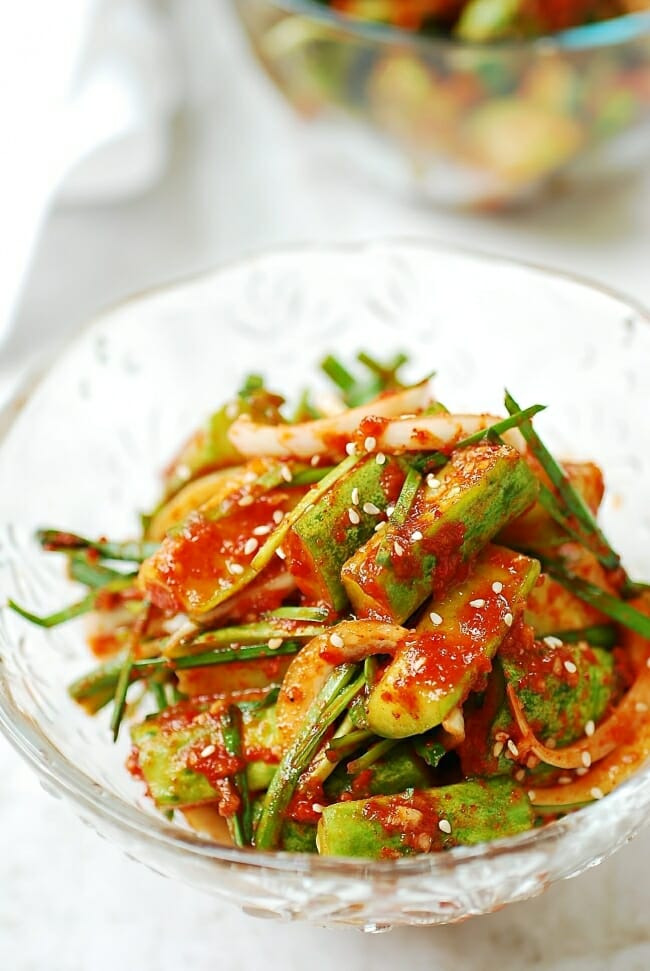
Ingredients (serves 4 as a side dish)
- 4 Persian or Kirby cucumbers (about 1 lb / 450g)
- 1 tbsp coarse sea salt (for salting the cucumbers)
- 2 tbsp gochugaru (Korean red pepper flakes)
- 1 tbsp fish sauce (or soy sauce for a vegan version)
- 1 tsp sugar
- 2 cloves garlic, minced
- 1/2 tsp fresh ginger, grated
- 2 green onions, sliced into 1-inch pieces
- 1/4 small carrot, julienned (optional)
- 1 tsp rice vinegar (optional, for extra tang)
- 1 tsp toasted sesame seeds, to finish
Step-by-Step Instructions
1. Cut and salt the cucumbers.
Slice the cucumbers into rounds about 1/2 inch thick, or quarter them lengthwise and cut into 2-inch batons — whichever way you like to eat them. Toss with the coarse salt in a bowl and let sit for 15–20 minutes. This draws out excess water so your kimchi stays crunchy instead of turning soggy.
2. Drain, but don't rinse too much.
Tip the cucumbers into a colander and gently press out the liquid with your hands. A quick rinse is fine if they taste too salty, but don't scrub off all the seasoning — a little residual salt is part of the flavor.
3. Make the seasoning paste.
In a small bowl, mix the gochugaru, fish sauce, sugar, garlic, and ginger into a thick paste. It should look like a deep red, slightly glossy paste — if it seems dry, add a teaspoon of water.
4. Combine.
Add the drained cucumbers, green onion, and carrot (if using) to the seasoning paste. Toss well with your hands (wear gloves if you're sensitive to chili) until every piece is coated in red.
5. Taste and adjust.
This is the step my grandmother never skipped. Taste one piece. Need more salt? A pinch. More tang? A splash of rice vinegar. More heat? Another half spoon of gochugaru. Kimchi is forgiving — trust your palate over the measuring spoon.
6. Serve or chill.
Sprinkle with sesame seeds and serve immediately for the freshest, crunchiest version — this is how I usually eat it, straight away with warm rice. Or cover and refrigerate for a few hours (or overnight) for the flavors to deepen. It keeps well in the fridge for up to 5 days, though the cucumbers will soften slightly the longer it sits.
Tips From My Kitchen
- Salt the cucumbers even if you're in a hurry. Skipping this step is the single most common reason people end up with watery, bland cucumber kimchi.
- Use a chili flake that's actually gochugaru. Regular red pepper flakes or cayenne will make it too hot and too red without the right flavor — gochugaru has a mild, slightly smoky sweetness that's essential here.
- Don't over-marinate if you like crunch. Oi kimchi is best within the first 1–2 days. After that, it's still good, but the texture shifts from "crunchy salad" to "soft pickle."
- Make it a meal, not just a side. Toss leftover oi kimchi through warm rice with a fried egg and a drizzle of sesame oil for one of the fastest dinners I know.
Frequently Asked Questions
Is oi kimchi the same as oi-sobagi?
They're closely related. Oi-sobagi is traditionally made by stuffing whole small cucumbers with the seasoning through a slit, while the version here is a quicker, sliced style — sometimes called "oi kimchi" or "mu-saeng" style. Both use the same core flavors.
Can I make this without fish sauce?
Yes. Swap in soy sauce, or a vegan fish sauce alternative, for a fully plant-based version. The flavor will be slightly less savory but still delicious.
How long does cucumber kimchi last?
In the refrigerator, about 4–5 days. It's meant to be eaten fresh rather than fermented for weeks like traditional napa cabbage kimchi.
Can I use regular English (waxy) cucumbers?
You can, but they release more water and have thicker skin. If that's what you have, peel strips of the skin off first, salt for a few extra minutes, and press out as much liquid as possible.
Final Thoughts
Oi kimchi is one of those recipes that proves you don't need a pantry full of specialty ingredients or years of practice to make something that tastes like home. Ten minutes of prep, a short rest, and you have a dish that's been passed down for generations — now made with cucumbers from wherever you happen to be living.
If you make this, I'd genuinely love to hear how it turned out and what substitutes you used in your part of the world.
Recipe adapted from a family recipe, tested with ingredients sourced in both Korean and Western supermarkets.