Teach You a Lesson: The Ultimate Guide to Korean BBQ Etiquette and Dining Culture
The first time I sat down at a Korean BBQ restaurant, I grabbed the tongs, threw a piece of pork belly straight into my mouth off the grill, and reached for my water glass to wash it down like it was a regular dinner. The Korean friends I was with were too polite to say anything at the time, but I found out weeks later — gently, and with a lot of laughing — that I'd basically eaten samgyeopsal wrong from start to finish.
Korean BBQ regularly tops the list of favorite Korean foods among foreign visitors, and for good reason — it's interactive, social, and genuinely delicious. But there's a whole system of small rituals around how it's eaten, shared, and washed down that nobody really explains up front. So here's the version I wish I'd had before that first dinner.
How to Actually Eat Samgyeopsal (It's Not Just "Grill and Eat")
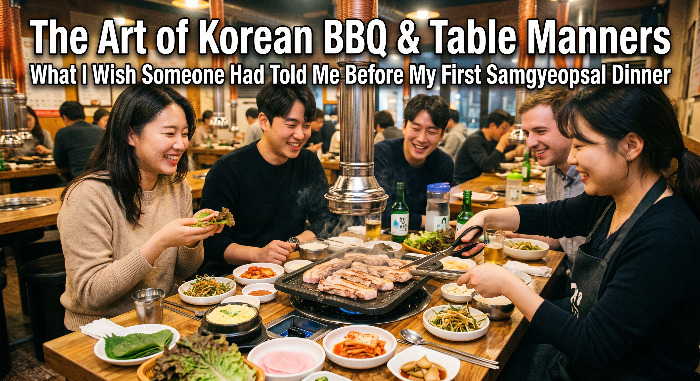
Samgyeopsal, Korea's beloved grilled pork belly, isn't really meant to be eaten on its own straight off the grill. The whole point is the wrap, called ssam — and getting the order right makes a real difference. Here's the basic sequence locals actually follow:
- Let the meat cook fully and get cut: At most Korean BBQ places, either your server or one of the table members will handle the cutting with scissors once it's done. If you're a guest, it's polite to let someone else handle the grilling and cutting at first.
- Prepare your leaf base: Start with the lettuce or perilla leaf (sangchu or kkaennip) as your foundation — hold it flat and open in one hand.
- Layer the flavors: Add your piece of meat, then a small dab of ssamjang (the thick, savory-spicy dipping paste), plus toppings like a sliver of raw garlic, a piece of grilled onion, or a slice of chili.
- Eat it in one single bite: The wrap is meant to go in whole, not nibbled in pieces. It's a bit of a jaw workout the first few times, but that's genuinely how the flavors blend perfectly together.
A few small etiquette notes worth knowing: it's common at the table for people to make wraps for each other, especially for a guest, as a small gesture of care. Also, resist the urge to drink water between bites to cool your mouth down — most locals pair the richness of the meat with a sip of soju or a spoonful of doenjang jjigae (soybean paste stew) instead, which cuts through the fat far better than water does.
Korean Drinking Culture: The Etiquette Behind the Soju Bottle
If there's one part of Korean dining culture that trips up foreign visitors more than the food itself, it's the drinking etiquette — and it's worth learning before you're handed a shot glass for the first time.
- Pour for others, not yourself: In Korean drinking culture, you generally don't fill your own glass. Instead, you keep an eye on the glasses around you and refill them when they're getting low, and others do the same for you.
- Use two hands for elders: When someone senior to you pours you a drink, it's respectful to hold your glass with both hands (or support your pouring arm with your other hand at the wrist). The same goes when you're pouring for them.
- Turn away slightly when drinking: In more traditional or formal settings, younger people will turn their head and body slightly away from a senior at the table before taking a shot, covering their glass with their free hand.
- The culture of Somaek: Somaek — a specific soju-and-beer mix — is its own social ritual, often used to kick off a night out with a lively performance involving a spoon to create a perfect smooth emulsion.
- "One shot" expectations: When someone raises a toast and shouts "wonshot" (원샷), the expectation is to clear the glass. However, it's completely fine to pace yourself or switch to a non-alcoholic drink if needed.
Why You Shouldn't Tip in Korea (And What to Do Instead)
This is the one that seems to genuinely confuse — and occasionally embarrass — visitors from tipping-heavy countries. Korea does not have a tipping culture, full stop. Restaurant staff are paid a standard wage, there's no tip line on the receipt, and leaving cash on the table will likely cause confusion.
| Dining Aspect | Korean Restaurant Standard | Western / Tipping Contrast |
|---|---|---|
| Tipping / Gratuity | 0% (Strictly No Tipping) | 15-20% standard service fee expected. |
| Side Dishes (Banchan) | Completely free and infinitely refillable. | Every single side item is charged separately. |
| Calling the Server | Call out loudly saying "Yeogiyo!" (여기요). | Waiting quietly for eye contact or waving down. |
| Settling the Bill | Bring the bill card to the front counter on your way out. | Waiting at the dining table for the check to arrive. |
Regarding the bill, splitting down to the exact won isn't always the default. Among friends, it's common for one person to pay for the whole round, with the understanding that someone else will cover the next spot. If you're used to tipping as a way of saying thank you, the honest Korean equivalent is simply saying so out loud ("Jal meogeotseumnida!"), being an appreciative customer, and returning again.
The Bigger Picture: A Culture of Looking Out for One Another
Looking back, none of what tripped me up that first night was really about "getting it wrong" in some strict, judgmental sense — Koreans are generally very forgiving of visitors who clearly don't know the customs yet. What I appreciate more now, having lived through the embarrassment and come out the other side actually understanding it, is that all of this — the shared wraps, the two-handed pours, the refilled glasses, the meal someone quietly pays for — is really just one continuous language for looking after the people at your table. Learn a little of it before you go, and a Korean BBQ dinner stops being just a great meal and starts feeling like you've actually been let in on something.
Travel Tip: When calling for service in modern Korean BBQ restaurants, look closely at the side of your table. Many places feature a small wireless call button attached directly to the wood, saving you from having to call out verbally across a loud dining room.